
When Life Wears Us Down: Lessons from a Dining Table
This reflective piece explores how the restoration of a well‑loved dining table mirrors the wear, stress, and healing we experience in life. Through trial, mistakes, patience, and the right support, we learn that restoration is always possible—if we recognise our condition, choose healthier tools, and seek guidance when needed.
Eileen Chang
3/11/20264 min read
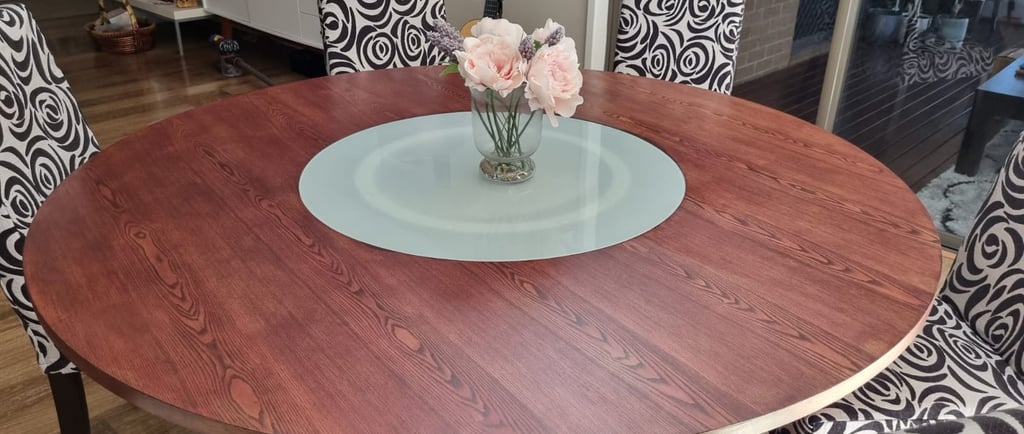
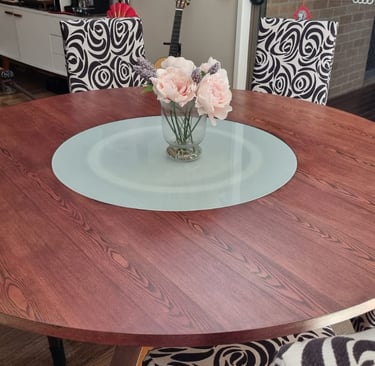
Recently my family embarked on a few home improvement projects. One of them was the restoration of our dining table. It is a round wooden table that was bought around 15 years ago, when we first moved into the house. We love this table, it can seat up to 10 people and facilitates group conversations wonderfully during gatherings. As Asians, we often have shared communal dishes so a round table works best for us.
A few years after we first bought it, the wear of daily use began to show. The varnish wore off where we made the most contact and the table top started feeling sticky. I decided to do some restoration on it but unfortunately, due to my inexperience, I used the wrong sanding tool and the stain/varnish was too dark. To cut the long story short, the table top ended up looking darker than before and most of the wood grain were covered up by the glossy varnish that was unevenly applied. I also probably used the wrong type of brush to apply the paint or I didn’t wait long enough before applying additional coats. Pockets of small air bubbles raised up through the paint and some parts looked pockmarked. Nevertheless, we closed one eye to the imperfections and continued to use the table for another 10 years.
To be honest, we all knew the table top needed restoration but neither of us had the courage nor energy to reattempt, partly out of fear that we will muck up again and partly because we simply didn’t have the knowledge nor skill to do a good job. This year, as we committed to a few home improvement projects, my husband bravely suggested to give the table another go at restoring the surface. This time, we got a proper orbital sanding tool and husband gave it a very thorough sanding, getting rid of the old paintjob. The table looked really pale and bare after the sanding but we needed to get rid of the old paintjob before it was ready for a fresh coat of ‘life’.
Again, we found ourselves at the same aisle in Bunnings, staring at the rows, shelves and different range of wood stains and varnish products, still an amateur. I really hated this part, too many choices and no one to tell you exactly what you really need. Knowing that the right choice makes all the difference and I only have one chance to get this right makes me really nervous.
With a bit of research (aka YouTube), we made our choice of a wood stain and benchtop oil. The wood stain was applied beautifully with a cloth applicator. Imagine my happiness when the wood grain pattern began to come back to life. We then used benchtop oil to protect the top after the staining but found that while it was food safe, it didn’t do so well in make it look ‘finished’. A tradie that came to install a barn door for us recommended a transparent stain which finally completed the whole restoration work. After all these years, our dining table looked good again. Not like brand new but I feel it’s restored almost 90% back to its glory. I am very proud of the outcome.
Now imagine if our tabletop’s experience is our life. Abuse or even just the daily wear of life over time can take its toll and we start to show signs of stress and fatigue. Like a worn-out table that is still usable, some people either never recognise or ignore these subtle signs of wear until it becomes debilitating. You are still in ‘working condition’ but you know you are not what you used to be.
Some people make attempts at self-restoration. However, due to lack of knowledge or patience, they make poor choices with the type of ‘tools’ (coping mechanisms). They turn to smoking, drugs or other maladaptive practices to make them feel better in the short term but they end up feeling and looking worse than before, like my table after I botched it up.
There was so much to learn in this restoration project. It took me a while to figure out that our table top was made of veneer (not laminate or wood). This important identification enabled me to choose the right treatment and approach for the restoration. Unfortunately, many people struggle with poor self-awareness. They know they have a problem - they are not sleeping well, they are often emotionally dysregulated, their relationships are falling apart but they don’t understand why.
The ability to recognise the physical symptoms and emotions that is happening in us is a skill that we need to develop. Sometimes, it is just a matter of asking ourselves questions. What am I feeling and why am I feeling like this? Other times, we may need the help of experts to give us more insights. I was struggling on my own in the aisles of Bunnings, deliberating over the many options of wood finishings and making myself confused. Versus a simple conversation with a professional, who took one look at my table, and provided me with guidance in the right direction. Yes, I learnt some valuable knowledge about woodwork over this process of research, trial and error, but who wouldn’t like it to get some tips and hints in the right direction? It would have saved me some time and plenty of grief.
The story of my table has a few important life lessons:
Restoration is never too late. You can be ‘good’ again.
Be honest about your ‘condition’. Learn to recognise the ‘wear and tear’ you have suffered.
Make a decision to give yourself the care you need.
Use the right methods or ‘tools’. Don’t make it worse.
Seek professional help if necessary to save you time and grief.
Be patient. The restoration and healing process might take time and involve working with a professional counsellor over multiple sessions. You may have to ‘shed’ your old ways in order to apply a new coat of life.
Hope Is Mine Counselling & Training
Empowering Change and Growth
© 2025. All rights reserved.